Relations to Speech
Singing, Speech, and Neural Overlaps
Professional singing often indicates an individual's ability to mimic speech, highlighting the distinct interconnection between music and language. Although singing is often characterized as a vocal production due to its reliance on absolute pitches and melodic lines, its physical production is, biologically, an embodiment of the human voice. Objective diagnostics, such as the AMMA (Advanced Measures of Music Audiation) test, demonstrated that perceptual music skills do not correlate with vocal speech imitation. The research explicitly emphasizes that an individual’s history of instrumental performance—including the age at which they began playing or the number of instruments they have prior experience with—is not connected to one's vocal flexibility, highlighting the stark linguistic contrast between vocal articulation and instrumental mechanisms.
Neuroimaging reveals a profound structural interconnection between linguistic and musical vocalization: both activate the bihemispheric brain in the superior temporal sulcus, the superior temporal gyrus, and the inferior pre- and postcentral gyri during regulated breathing, indicating that singing and speaking fundamentally rely on the same speech production mechanisms. A good singer’s speech imitation ability is deeply rooted in their vocal flexibility, often developed through continuous practice. Anatomically, these are indicated by a singer’s precise structure of fine-tuning and the vocal apparatus, specifically the palate, the tongue, the lips, and the larynx. Both musical and linguistic communication share the same sensory network and vocal apparatus, thereby activating the proprioceptive feedback system.
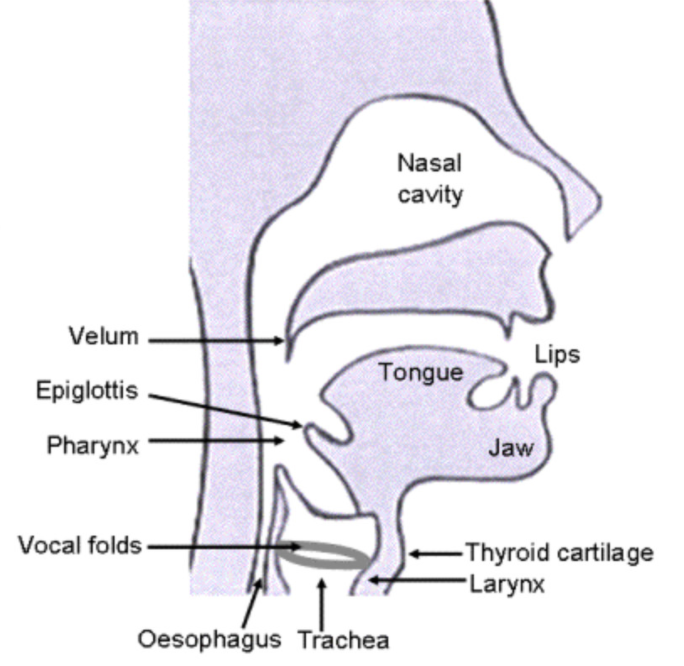
Although regular speech production is usually controlled by “an auditory feedback control subsystem, as omatoseneory feedback control system, and a feedforward control subsystem,” professional singers’ developed kinesthetic system enables effortless precision when external auditory feedback is missing.
Essentially, the environment individuals are in when acquiring their first languageis significantly different from that of a second-language setting due to how it physically influences our vocal structure. Conventional language introductions typically fail to adequately address the importance of proper pronunciation habits by prioritizing text-based vocabulary over phonetic practice, often leaving learners perplexed about how their vocal anatomy must function to produce foreign sounds.
In contrast, primary language development is deeply rooted in highly physical, sensorimotor experiences, where parents instinctively use wide variations in pitch and vowel use, and exaggeration, to allow infants to experiment with their vocal anatomy, building crucial orofacial motor control and potentially laying the foundation for long-term voice quality that begins in early childhood.
Essentially, both singers and native-language learners develop a sophisticated foundation for these nuanced verbal activity through incorporating non-linguistic abstract exercises such as expanding vocal ranges to develop a stronger vocal structure for speech, enabling greater vocal agility, and facilitating speech imitation.
Sources
- Anatomy of Vocal Tract. UNSW, www.phys.unsw.edu.au/jw/voice.html. Accessed 17 Oct. 2026.
- Christiner, Markus, and Susanne M. Reiterer. "Song and Speech: Examining the Link between Singing Talent and Speech Imitation Ability." PMC. National Library of Medicine, 22 Nov. 2013, pmc.ncbi.nlm.nih.gov/articles/PMC3837232/. Accessed 17 Oct. 2026.
EXPERT INTERVIEWS
None published yet under this theme
Interviews are the hardest part of the project to secure and the most valuable, so approaches go out early. When one is recorded it will appear here.